Internationale Handwerksmesse München
08. – 14.03.2017 – Messegelände
Halle B1 – BKV BAYRISCHER KUNSTGEWERBEVEREIN
Stand Nummer B1.442 – Ausstellungsbeteiligung
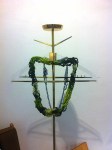
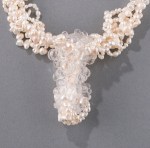
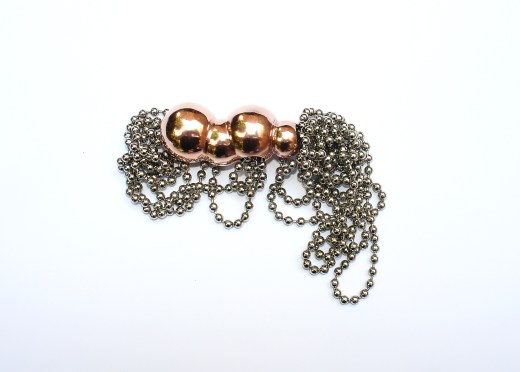
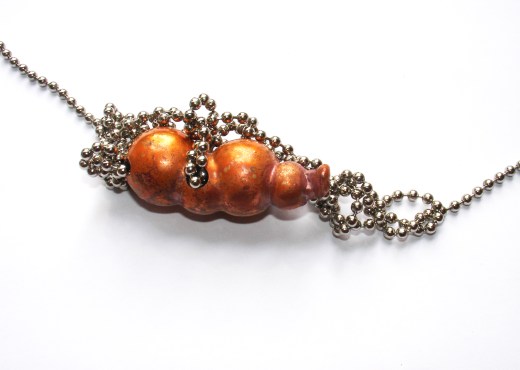
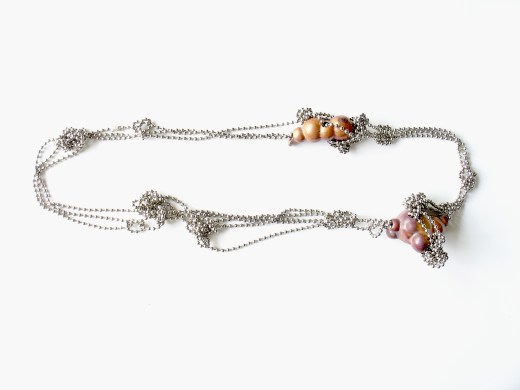
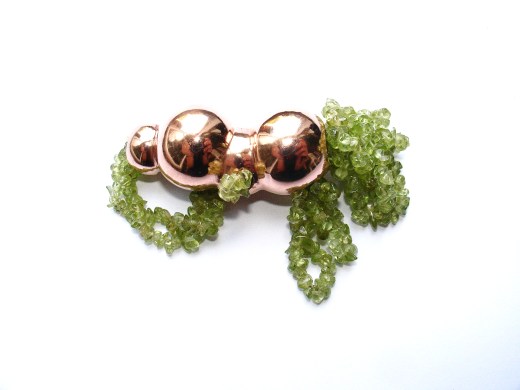
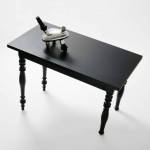
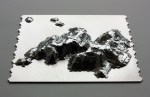
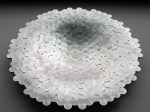
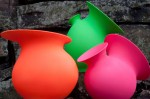
- Toma mit „Audrye“
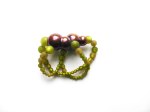
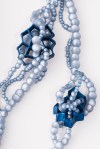
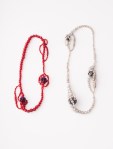
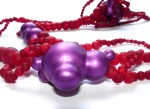
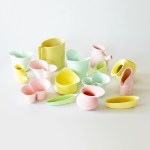
- Kette: „Audrye“
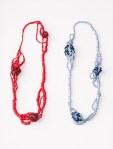
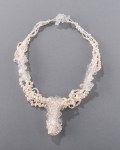
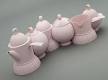
- Kette: „Audrye“
Internationale Handwerksmesse München
08. – 14.03.2017 – Messegelände
Halle B1 – BKV BAYRISCHER KUNSTGEWERBEVEREIN
Stand Nummer B1.442 – Ausstellungsbeteiligung
24., 25., 26. Februar 2016, Nürnberg – München
Eine Kooperation der Silber Sommer Galerie mit dem Neuen Museum, Staatliches Museum für Kunst und Design in Nürnberg und der Internationalen Handwerksmesse München
24. Februar 2016 – 18:00 Uhr
Neues Museum – Staatliches Museum für Kunst und Design in Nürnberg, Klarissenplatz, 90402 Nürnberg
Begrüßung: Dr. Eva Kraus Direktor Neues Museum
Einführende Worte: Alessandra Pizzini Kurator Silber Sommer Galerie
Es sprechen:
Prof.dr. David Huycke: “The Critical Moment“ (in englischer Sprache)
Annette Zey: “Bausteine“ (in deutscher Sprache)
Geschichtenerzähler Martin Ellrodt: “Geschichten von Bildern und Ebenbildern” (in deutscher Sprache)
Katja Höltermann: “Transfer“ (in deutscher Sprache)
Peter Bauhuis: “Armillaria, Arithmeticians and other Amazements” (in deutscher Sprache)
Die Beiträge sind auf der Internationalen Handwerksmesse München – Messegelände München “HandwerkDesign“ Halle B1, Aktionsbühne zu hören am 25. Februar 2016 – 14:00 Uhr (David Huycke, Annette Zey, Martin Ellrodt) und am 26. Februar 2016 – 16:00 Uhr (Katja Höltermann, Peter Bauhuis)
Der Vortragsabend „Eins oder Mehrere“ möchte den Besuchern das Verhältnis zwischen Gegenständen, die nur einmal hergestellt werden, und Gegenständen, die doppelt, als Gruppe oder in Variationen entworfen werden, beleuchten.
Die Zahl zwischen „eins“ und „mehrere“ ist nicht genau definiert. Es könnte die Zwei sein, das Paar. Es könnte die Fünf sein und somit eindeutig schon eine Gruppe. Es könnte aber auch die Tausend sein. Alle diese Begriffe verstehen sich in diesem Zusammenhang ausschließlich in der Beziehung „Eins – Mehrere“. Bei der Kontextualisierung von Kunst und Designgegenständen ist die Frage nach der Einmaligkeit versus Vervielfältigung immer relevant.
Folgende Aspekte werden bei den vorgeschlagenen Vorträgen erörtert:
Welchen Stellenwert hat das Unikat heutzutage? Sind Variationen innerhalb einer Gruppe auch als Unikate zu verstehen? Wie stehen – bei Gruppen – die jeweiligen Gegenstände zu den anderen; in welchem Ausmaß spiegelt die Gruppe eine konzeptionelle Überlegung wieder? Das „Paar“, also zwei Gegenstände, die zusammen zu sehen sind, hat eine einzigartige Aussage, verglichen mit der Aussage, die die jeweiligen Objekte einzeln haben. Wie kommunizieren Objekte miteinander und wie machen die Künstler von dieser Eigenschaft Gebrauch?
Die eingeladenen Designer beschäftigen sich in ihrem Schaffen ständig mit diesen Themen und werden anhand des eigenen Werkes unterschiedliche Positionen zeigen. Ein Geschichtenerzähler wird die Zuhörer die Thematik aus einem ganz anderen Blickwinkel erleben lassen.
Die Silber Sommer Galerie ist eine internationale Plattform für Künstler, die handgefertigtes, zeitgenössisches Tafelgerät der Öffentlichkeit präsentiert. Ziel des Projekts, das seit 2009 von der Designerin Alessandra Pizzini geleitet wird, ist es, dem Publikum innovatives Tafelgerät näher zu bringen und die Entwicklung einer neuen Tischkultur zu fördern. Durch die stetige Zusammenarbeit mit mehreren europäischen Kunsthochschulen und internationalen Designern konnte die Silber Sommer Galerie bislang ein vielfältiges und inspirierendes Panorama an Veranstaltungen zeigen.
Gefördert durch das Bayerische Staatsministerium für Wirtschaft und Medien, Energie und Technologie und bayern design GmbH
11., 12., 13. März 2015, Nürnberg – München
Eine Kooperation der Silber Sommer Galerie mit dem Neuen Museum, Staatliches Museum für Kunst und Design in Nürnberg und der Internationalen Handwerksmesse München
Internationalen Handwerksmesse München – Messegelände München „HandwerkDesign“ Halle B1, Aktionsbühne
Donnerstag, 12. März 2015 – 14:00 Uhr
Begrüßung: Dr. Silke Claus, Manager bayern design
Einführende Worte: Alessandra Pizzini, Kuratorin Silber Sommer Galerie
Es sprechen:
Dr. (PhD) Andreas Fabian, DE/UK: In & out of use
Designerin Ma´ayan Pesach, IL/NL: Tribaling Mass-Production
Silberschmiedin Beate Leonards, DE: Von der Liebe zur Form)
Freitag, 13. März 2014 – 16 Uhr
Begrüßung: Alessandra Pizzini, Kuratorin Silber Sommer Galerie
Es sprechen:
Senior lecturer Simone ten Hompel, DE/UK: Ins Zeug gelegt
Artist Tobias Birgersson, SW: Feed the Beast
Gefördert durch das Bayerische Staatsministerium für Wirtschaft und Medien, Energie und Technologie und bayern design GmbH
11., 12., 13. März 2015, Nürnberg – München
Eine Kooperation der Silber Sommer Galerie mit dem Neuen Museum, Staatliches Museum für Kunst und Design in Nürnberg und der Internationalen Handwerksmesse München
Mittwoch, 11. März 2015 – 18 Uhr
Neues Museum, Staatliches Museum für Kunst und Design in Nürnberg – Klarissenplatz – 90402 Nürnberg
Begrüßung:
Einführende Worte: Alessandra Pizzini, Kuratorin Silber Sommer Galerie
Es sprechen:
Senior lecturer Simone ten Hompel, DE/UK „Ins Zeug gelegt“ (in German)
Designer Ma´ayan Pesach, IL/NL: Tribaling Mass-Production (in English)
Silversmith Beate Leonards, DE: Von der Liebe zur Form (in German)
Artist Tobias Birgersson, SW: Feed the Beast (in German)
Dr. (PhD) Andreas Fabian, DE/UK: In & out of use (in English)
Gefördert durch das Bayerische Staatsministerium für Wirtschaft und Medien, Energie und Technologie und bayern design GmbH
Schloss Johannisburg – Aschaffenburg
Der Danner-Preis ist die bedeutendste Auszeichnung für das Kunsthandwerk in Bayern. Prämiert werden kunsthandwerkliche Arbeiten besonderer Qualität. Vertreten sind Gold- und Silberschmiede und Keramiker, aber auch Arbeiten aus Holz, Glas, Textil und Metall werden eingereicht. Der Preis wird seit 1984 alle drei Jahre durch die Danner-Stiftung vergeben und will neue gestalterische Ideen und Entwicklungen des Kunsthandwerks fördern. Besonders junge Künstler und Handwerker sind aufgerufen, sich an dem Wettbewerb zu beteiligen.
Die Ausstellung im Schlossmuseum Aschaffenburg wird die prämierten Werke und eine Auswahl weiterer Objekten, die von einer internationalen Jury ausgewählt wurden, der Öffentlichkeit präsentieren.
Ateliertage für angewandte Kunst im Raum Nürnberg
Atelier in der Amselstraße
Amselstraße 20 – Nürnberg
21. 11. – 23. 11. 2014
an 22 verschiedenen Orten Arbeiten aus den Bereichen Textil, Glas, Papier, Keramik,
Metall sowie Schmuck und Gerät – und auch in der Amselstraße.
Von Freitag 21.11. – Sonntag 23.11.2012 wird es wieder möglich sein, mit den
Künstler / innen in Kontakt zu treten, „EinBlick“ in ihr Schaffen zu nehmen.
Programm
Öffnungszeiten der Ateliers an diesem Wochenende:
Freitag 21.11.2012 18.00 – 21.00 Uhr
Samstag 22.11.2012 14.00 – 21.00 Uhr
Sonntag 23.11.2012 11.00 – 19.00 Uhr
„EinBlick-Biennale“ – Ateliertage für angewandte Kunst im Raum Nürnberg
an 22 verschiedenen Orten Arbeiten aus den Bereichen Textil, Glas, Papier, Keramik,
Metall sowie Schmuck und Gerät – und auch in der Amselstraße.
Von Freitag 16.11. – Sonntag 18.11.2012 wird es wieder möglich sein, mit den
Künstler / innen in Kontakt zu treten, „EinBlick“ in ihr Schaffen zu nehmen.
Öffnungszeiten der Ateliers an diesem Wochenende:
Freitag 16.11.2012 18.00 – 21.00 Uhr
Samstag 17.11.2012 14.00 – 21.00 Uhr
Sonntag 18.11.2012 11.00 – 19.00 Uhr
Fotogalerie
12., 13., 14. März 2014, Nürnberg – München
Mittwoch, 12. März 2014 – 18 Uhr
Neues Museum- Staatliches Museum für Kunst und Design in Nürnberg
Klarissenplatz- 90402 Nürnberg
Es sprechen:
Drummond Masterton (UK) – Deborah Werbner (UK) – Isabell Enders (DE) – Simon Pattison (UK) – Anders Ljungberg (SW) – Juliane Schlöß (DE)
p l a c e _ m e n t
The ‘placing’ of precious object as a means of exploring issues related to identity and origin.
Collaborative project, exhibition, symposium and publication
Alessandra Pizzini, Johanna Zellmer, Beate Eismann
Exhibition opening and Symposium: 17 October 2013
Alchimia, School of Contemporary Jewellery and Design, Piazza Piattellina 3/r, 50124 Florence, Italy
Exhibition runs: 18 – 20 October 2013
Speeches: 5:00p.m.
Opening: 6:00p.m.
A publication with essays by Mònica Gaspar, Dr. Pravu Mazumdar and Dr. Petra Hölscher will be published on occasion of the exhibition. ISBN 978-0-908846-60-3

The collaborative project p l a c e _ m e n t has been developed by three jewellery artists through their shared interest in the dynamic of jewellery as both public signifier and intimate object. Their countries of residence and origin – Germany, Italy and New Zealand – continue to shape their individual practices and identities as contemporary makers. Whilst their practices vary, each artist contributes to the field of contemporary jewellery through the manipulation of objects to raise questions about the idea of origin and, at the same time, to explore the complexity of cultural and personal identity in today’s increasingly hybridized world.
Alessandra Pizzini works with intimate objects as signifiers of identity. These personal or ‘favoured’ objects are usually things a person takes particular care of and keeps in special places, things like souvenirs, found objects, photos, heirlooms and, in particular, jewellery. The longing for such objects becomes more prevalent in those moments of transition that denote significant changes in our lives, moments frequently marked by ritual, celebration and, of course, by the object itself. With their unique symbolic and fetishistic character, such objects seem to have accompanied our human evolution as an anthropological constant.
In order to reflect on the specific circumstances that tie us to such items, Pizzini bases her work on evocative sets of objects gathered in her own home. Forms, materials and processes are chosen in an attempt to capture the affective tone of these transitional moments. Her methodology draws the audience into the experiences and emotions embedded in these objects without decoding their secrets completely. In doing so, she explores the way in which belongings can become spiritual, emotional and almost bodily habitats. By focusing our awareness on her selection of such contemporary ‘talismans’, Pizzini emphasises the importance of such moments in our present, inviting us not only to reflect on the rituals and traditions of the past, but also to engage in the creation of new rituals of our own. She also acknowledges that the significance of these intimate objects is very often determined by where and how they are kept, by their ‘place-ment’ in our lives. By de-contextualising these objects and‘ re-placing’ them within the exhibition space, the artist invites the formation of new relationships and alternative interpretations, simultaneously affirming and subverting their semantic power.
Johanna Zellmer’s contribution to the larger framework of place·ment emerges as a direct outcome from her work with 10DM commemorative coins, during which the German eagle as heraldic sign emerged as the key player. In the process of working with these coins, she became very interested in the question of national representation; a topic that poses a considerable challenge for a nation such as Germany with its particular history. Responses from New Zealand and German audiences to this work led her to question how individuals identify with the iconographic symbols of their nations. New Zealand, as a former colony with Treaty obligations, is very attentive to the particular issues of a bi-cultural nation; a fact that confronts newly arrived immigrants with some interesting questions. As a German citizen with permanent residence in New Zealand, Zellmer is regularly confronted with the complexities of her own cultural ‘place-ment’.
Zellmer’s recent work explores these questions, particularly as they relate to New Zealand immigrants who have been unable to obtain dual citizenship. Through the work, she addresses the idea of nationhood and the relationship one has with one’s country of origin, as well as the politics that regulate citizenship and national borders, and how all of these impact on the individual’s personal sense of identity and belonging. Her practice employs a variety of visual art methodologies, including photography, text and jewellery; portraits are framed, interviews transcribed and objects are forged from saw pierced coins. These objects become jewellery by integrating the unobtrusive plastic tubing used for hearing aids, enabling an individual fitting to each subject’s ear; when worn in bright daylight, the perforated passport number stamped on each piece appears on the neck of the wearer as part of the distorted symbol’s shadow. The physical use of currency, passport imagery and hearing aid components provides a direct link to relationships between national identity, capitalist economies and the sense of impairment experienced when engaging with an unfamiliar culture. By altering the metal coin and thus subverting its monetary value, Zellmer is retaining its status as familiar ‘precious’ object of our everyday while, at the same time, questioning whether the hybrid identities of contemporary culture can be effectively embodied in a single object.
Beate Eismann’s work investigates the potential of reproduction and its relationship to the object of origin. Playing with this notion, Eismann scans analogue printing masters (metal clichés) and uses the digital data as the basis for generating a three dimensional “re-materialisation” which is then used along with the original to create jewellery and form objects. The reproductions of printing masters are traded as ‘originals’ on the art market, something which essentially they are not. By working with clichés Eismann raises complex questions concerning the status of original and copy, original form and reproduction, and even the place of copyright.
Eismann’s practice repeatedly crosses and displaces boundaries between high-tech industrial printing, graphic design and contemporary jewellery. The traditional processes of printmaking have always fascinated her because they represent a very simple way to repeat an image presentation. In an extension of this fascination, Eismann now employs rapid prototyping technology which was developed for industry but is now increasingly being used in the applied arts. In this 3D printing technology, the material is applied in a stencil-like manner onto previously determined segments of a surface. During the countless repetitions of this process, the motif to be printed leaves the second dimension and reaches into the third; it creates space. Digital processes enable this step by optimising data duplication and realising it at a speed which could not even be thought of in the time of analogue print technology. Using these technologies, Eismann generates a three dimensional transformation, a ‘re-materialision of the original cliché; she then reworks and finishes the pieces by hand. Their final shapes not only reflect multiple print technologies but also carry an embedded reference to the long history of printmaking. By blurring the boundaries between the hand and machine-made (or mass-produced), and by replacing and juxtaposing the original with a copy, this work unsettles the hierarchies that privilege the one over the other and embraces the creative possibilities of contemporary hybridity.
The aim of this collaboration was to generate a ‘conversation’ at the intersection of these individual but related perspectives. By de-contextualising, re-working and re-placing existing materials, all three artists have used their work to challenge traditional readings of place, significance and value. Their work raises questions about the idea of origin and, at the same time, explores issues of cultural and personal identity in today’s increasingly complex world. Each artist’s interpretation has evolved through on-going dialogue, both in person and on-line, so that the conceptual framework of the project is appropriately hybrid in both its origins and outcomes.
The project will be launched in October at Alchimia, School of Contemporary Jewellery and Design in Italy. This institution was founded by Lucia Massei and Doris Maninger in 1998 and is situated in an historical building near the prominent Brancacci chapel in Oltrarno, the historical artisan quarters of Florence. The placing of this collaborative work within such an environment will serve to highlight the inseparability of past and present which is central to the work of all three artists.
Being a place of teaching, learning and exploratory exchange, Alchemia is well suited to the project’s aspiration to extend their conversation to engage a wider audience. The exhibition opening will therefore be followed by a symposium with floor talks by each artist. The associated publication, which includes academic essays by Mònica Gaspar, Dr. Pravu Mazumdar and Dr. Petra Hölscher, is intended to further extend the parameters of the conversation to include philosophical and art historical enquiries alongside contemporary studio practice.

Biographies
Alessandra Pizzini initially gained a degree in Jewellery Design in Milan, Italy, and subsequently worked in Milan as a designer for several years. Her passion for contemporary jewellery took her to the Academy of Fine Arts in Nürnberg, Germany, where she completed further studies in gold-and silversmithing. She was employed as Artistic Assistant at the Academy of Fine Arts in Nuremberg in 2002 and later also taught at „Alchimia“ Contemporary Jewellery School in Florence for one year. She lives as freelance designer and jewellery artist in Germany, and frequently teaches subjects such as Museum Pedagogy at tertiary institutions. In 2008 she gained the HWP stipend for women in education and research, which enabled her to investigate jewellery as a sociological and anthropological phenomenon. The human desire for adornment alongside the construction of a sense of identity through everyday objects is central to her considerations as educator and jewellery maker.
Johanna Zellmer completed a formal apprenticeship as a goldsmith in Germany and continued with silversmithing afterwards. A scholarship from the Carl Duisberg Association to study in Australia enabled her to complete a masters degree at the Australian National University Canberra School of Art. Together with her Australian husband, she decided to move to New Zealand and initially started teaching in Auckland. She now works as Senior Lecturer in Jewellery and Metalsmithing at the Dunedin School of Art, where she has also held the position of Postgraduate Coordinator for several years. Her research interests are the construction of national identities and cross-cultural matters within contemporary jewellery. She calls a small farm in Dunedin `home‘, as showcased in context of her work in the TVONE series Neighbourhood.
Beate Eismann completed her studies in jewellery at the University of Arts and Design / Burg Giebichenstein, after which she gained a scholarship from CONACYT and the Carl Duisberg Association for a 2 year residency in Mexico City. Upon her return in 1998, she accepted a lecturing position at the Staatliche Zeichenakademie in Hanau (Germany), which was followed by an appointment to Artistic Assistant at the Department of Jewellery, University for Arts and Design/ Burg Giebichenstein in Halle from 2000 to 2006. As a successful freelance artist , Beate attains regular scholarships and artist residencies, such as Master Artist in Jewellery at the Pratt Fine Arts Center, Seattle (USA), the Art Foundation of the Federal State of Saxony Anhalt Scholarship and Artist in Residence at the Institute for Research in Applied Arts, University of Applied Sciences Düsseldorf (Germany), to name but a few. Beate lives and works in Halle (Saale), Germany.
Supported by the exhibition and gallery programme, Kunststiftung Sachsen-Anhalt
and the Otago Polytechnic Research Fund